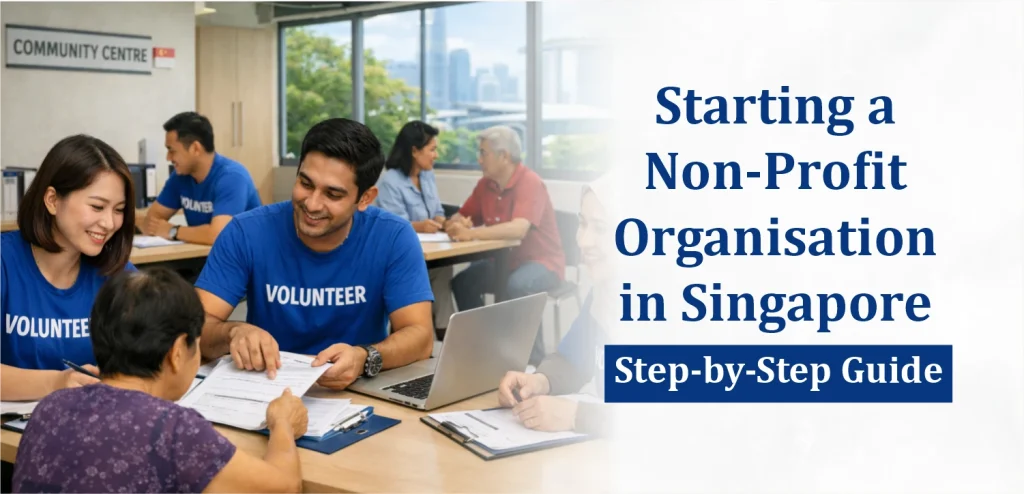
Starting a Non-Profit Organisation in Singapore: Step-by-Step Guide
22 December 2025
- Share on
-

-

-


Singapore is widely regarded as one of Asia’s most trusted and stable jurisdictions for establishing mission-driven entities. Its transparent regulations, robust governance standards, and strong philanthropic culture make it an attractive location for non-profit organisations seeking long-term impact. This guide provides a comprehensive, professionally constructed overview of how to set up a non-profit organisation in Singapore, the regulatory options available, and the essential compliance obligations every founder must understand.
1. Overview of Non-Profit Organisations in Singapore
Before initiating nonprofit registration, founders must first determine the most suitable legal structure. In Singapore, non-profit organisations typically fall under three main categories:
1.1 Company Limited by Guarantee (CLG)
A CLG is the most professional and versatile structure for an NGO in Singapore, often preferred by charities, social enterprises, and international NGOs.
Key features include:
- No share capital; members guarantee a nominal sum upon winding up.
- Strong governance structure suitable for grant applications and large-scale operations.
- Regulated under the Companies Act and overseen by the Accounting and Corporate Regulatory Authority (ACRA).
1.2 Society
A Society comprises a group of individuals joined by a common purpose.
Characteristics:
- Governed by the Registry of Societies (ROS).
- Relatively simple setup process.
- Suitable for community groups, interest groups, and volunteer organisations with local operations.
1.3 Charitable Trust
A trust is established through a trust deed and managed by trustees.
Key points:
- Used for asset stewardship, scholarships, and long-term charitable funds.
- Regulated under common law and overseen by the Commissioner of Charities (COC).
2. Step-by-Step Process to Establish a Non-Profit Organisation in Singapore
The following guide details the full procedural workflow for founders seeking robust and compliant nonprofit registration.
Step 1: Define Mission, Objectives, and Beneficiaries
A clear organisational purpose is essential to determine the appropriate structure and future regulatory obligations.
Document:
- Mission statement
- Scope of activities
- Target beneficiaries (local, international, or both)
- Governance principles
This foundational clarity is especially important if the organisation intends to apply for charitable status later.
Step 2: Select the Legal Structure
Choose between a CLG, Society, or Trust based on your organisational design.
Key considerations include:
- Scale of operations
- Whether foreign founders are involved
- Fundraising strategies
- Governance and liability requirements
For international NGOs and professionally run entities, a Company Limited by Guarantee is generally the preferred route.
Step 3: Reserve Name and Prepare Constitutive Documents
Depending on the structure:
For CLG Registration with ACRA:
- Proposed organisation name
- Constitution (formerly known as Memorandum & Articles of Association)
- Details of officers and members
- Registered office address
For Societies under ROS:
- Proposed society name
- Constitution with clear rules for membership and governance
- Office bearers’ details
- Address for operations
ACRA and ROS will review applications for compliance, name availability, and policy considerations.
Step 4: File the Registration
4.1 CLG Registration with ACRA
- Apply via BizFile+
- Pay statutory fees
- Appoint a company secretary within six months of incorporation
- Maintain a registered office
4.2 Registration of a Society with ROS
- Submit the online application via the ROS portal
- Await approval (typically 2–8 weeks, depending on complexity)
Upon approval, the organisation is legally recognised as an NGO in Singapore.
Step 5: Apply for Charitable Status (Optional but Beneficial)
An organisation may apply to the Commissioner of Charities to be officially recognised as a charity.
Eligibility criteria:
- Purposes must fall under recognised charitable categories
- Activities must benefit the public
- Strong governance and internal controls must be demonstrable
Advantages:
- Enhanced public trust
- Access to certain grants and philanthropic funds
Step 6: Establish Governance, Policies, and Internal Controls
Effective governance is essential for reputation and compliance.
Core documents include:
- Board charter
- Conflict-of-interest policy
- Financial management and donation-handling policies
- Data protection frameworks
- Internal audit processes
- Volunteer and staff management procedures
Strong governance also improves access to funding and partnerships.
Step 7: Set Up Operational Infrastructure
Ensure practical administration is in place:
- Open a corporate bank account
- Implement accounting and bookkeeping systems
- Draft operational SOPs
- Recruit staff or onboard volunteers
- Establish IT and cybersecurity systems
- Plan fundraising and engagement strategies
Singapore’s regulatory environment places significant emphasis on transparency, particularly for non-profit organisations receiving public funds.
Step 8: Maintain Ongoing Compliance
All non-profit organisations in Singapore must uphold regulatory obligations, including:
ACRA-Regulated CLGs
- Annual return filings
- Financial statements (audited or unaudited, depending on thresholds)
- Updating registers of members and officers
- Regular board meetings and resolutions
Societies
- Filing annual submissions to ROS
- Updating changes in the constitution or office bearers
Charities and IPCs
- Annual reports and audited financial statements
- Fundraising reporting
- Strict governance and conflict-of-interest compliance
Non-compliance may result in penalties, suspension, or deregistration.
3. Choosing the Right Structure for Your NGO
| Legal Structure | Governing Authority | Best For | Key Advantages |
|---|---|---|---|
| Company Limited by Guarantee | ACRA | Professional charities, international NGOs, and grant-seeking entities | Strong governance, high credibility, and access to grants |
| Society | ROS | Community groups, membership-based organisations | Simple setup, cost-effective |
| Charitable Trust | COC | Philanthropic funds, endowments, and long-term asset management | High asset protection, ideal for legacy planning |
4. Why Singapore is Ideal for Non-Profit Organisations
Key benefits include:
- Stable regulatory environment
- Strong reputation for transparency and governance
- Access to philanthropic networks and regional donors
- Ease of doing business
- Skilled workforce and volunteers
- Strategic location for Southeast Asia outreach
These advantages make the jurisdiction exceptionally attractive for the establishment of non-profit organisations in Singapore and internationally oriented NGOs.
Conclusion
Establishing a non-profit organisation in Singapore involves a structured and transparent process designed to safeguard public interest and enhance organisational integrity. Whether forming a CLG, Society, or Trust, founders must carefully assess governance needs, compliance obligations, and future growth plans. With proper planning, NGOs in Singapore benefit from strong credibility, efficient regulatory frameworks, and long-term operational stability.